
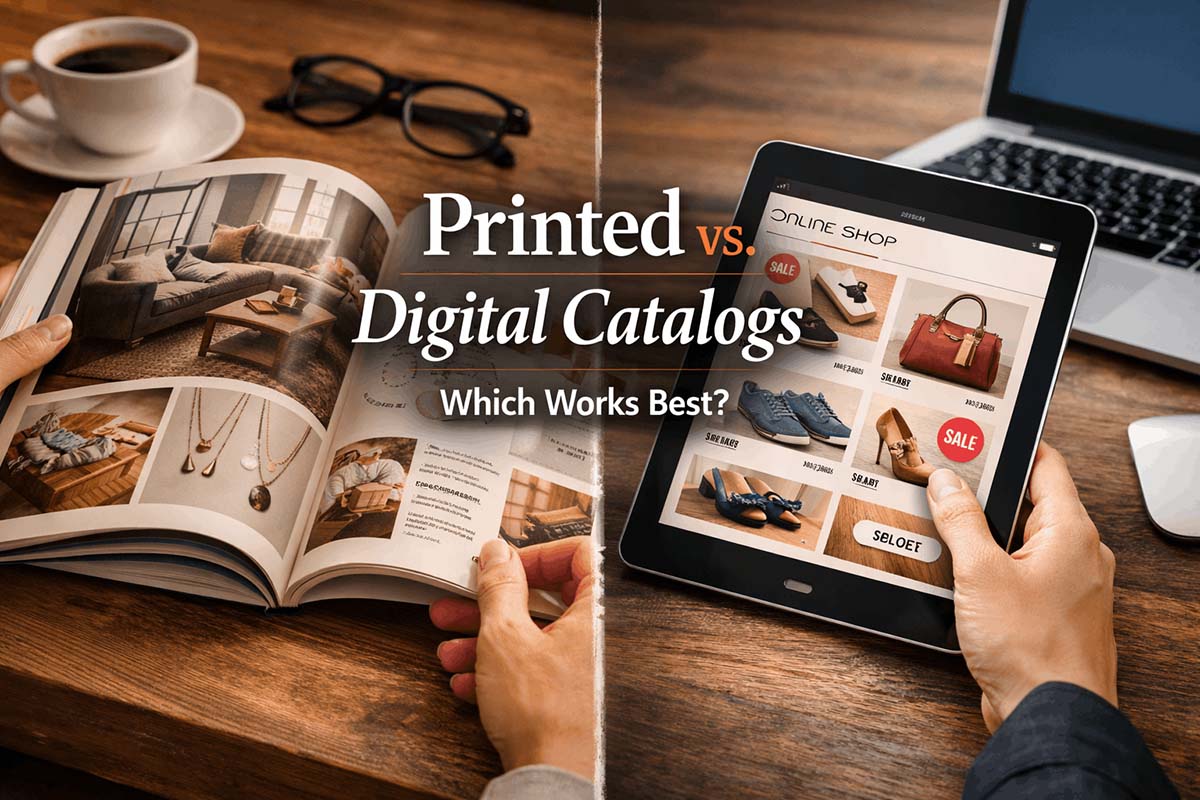
Running a small business means finding smart ways to reach customers. One big choice is whether to use printed catalogs or digital ones. A printed catalog from a trusted catalog printing company can feel personal and give customers something they can hold in their hands. On the other hand, digital catalogs are easy to share online and can reach people faster. Both options have their strengths, but which one works best for small businesses today? Let’s explore the differences and see how each can help a business grow.
Print vs. Online Catalogs: Best for Small Shops?
Here is a twofold design and idea as to which printing option is the best in their respective arenas.
Printed catalogs might seem like something from long ago, but they have cool benefits that digital ones can't match. Here's why they still work great for businesses.
1. Tangible Experience
People love touching and flipping real pages. They can circle favorite items with a pen, dog-ear pages, or leave the catalog out where everyone sees it—like on a coffee table. This makes shopping feel fun and personal.
2. Brand Credibility
A fancy booklet from a top catalog printing company looks professional and builds trust. It shows the business cares about quality, not like a quick email that might get deleted.
3. Targeted Reach
Send catalogs only to loyal shoppers or special groups, like fans of handmade jewelry. This makes customers feel special and picked just for them, boosting sales.
4. Longer Shelf Life
Printed catalogs stick around homes for weeks or months. Unlike online ads that vanish when you scroll, people keep them handy for reference or inspiration.
For example, A boutique furniture store might use custom catalog printing to showcase seasonal collections, encouraging customers to visit the showroom.
Digital catalogs are getting popular for small shops, especially if money is tight. They save cash and reach more people than paper ones.
1. Cost-Effective
No printing or shipping costs compared to even affordable catalog printing.
2. Instant Updates
Change prices, add new items, or fix sales right away. No waiting for new prints.
3. Wider Reach
Send by email, post on social media, or add to your site. Customers anywhere can see it fast.
4. Interactive Features
Click links, watch videos, or buy right from the page. Makes shopping easy and fun.
5. Eco-Friendly
No paper or ink waste. Helps the planet and shows you care about green living.
For example, a jewelry maker shares a digital catalog on Instagram. Fans click, shop, and buy in seconds.
Some key distinctions that businesses need to know
In this section of the article, we shall explore some of the key distinctions small businesses need to know
1. Marketing Impact
Printed catalogs from a professional catalog printing company often feel more personal and can strengthen brand identity. Customers may associate the weight, texture, and design of a catalog with the quality of the business.
Digital catalogs, meanwhile, allow small businesses to track clicks, measure engagement, and see which products are most popular. This data-driven approach helps refine marketing strategies quickly.
2. Customer Demographics
Different age groups respond differently to catalogs.
Older customers may prefer printed catalogs because they are familiar and easy to browse. Younger customers, however, often lean toward digital catalogs because they are mobile-friendly and interactive.
By working with an affordable catalog printing service, businesses can still reach traditional audiences while using digital catalogs to connect with tech-savvy shoppers.
3. Environmental Considerations
Printed catalogs require paper and ink, which can raise sustainability concerns. However, many catalog printing companies now offer eco-friendly options, such as recycled paper and soy-based inks.
Digital catalogs are naturally more eco-friendly, but they depend on devices and internet access. Businesses can highlight their green practices by choosing custom catalog printing with sustainable materials.
4. Emotional Connection vs. Convenience
Printed catalogs create an emotional bond. Customers often enjoy flipping through pages, circling items, or sharing catalogs with family. This tactile experience is something digital catalogs cannot fully replace.
Digital catalogs, however, win in convenience. They allow instant purchases, quick updates, and global sharing. The choice depends on whether a business values deeper emotional connections or faster transactions.
5. Seasonal and Event-Based Use
Printed catalogs are excellent for seasonal launches, holiday promotions, or special events. A reliable catalog printing company can help design catalogs that feel festive and memorable.
Digital catalogs, on the other hand, are perfect for flash sales, limited-time offers, or product updates. Many small businesses blend both—using custom catalog printing for big events and digital catalogs for everyday marketing.
Best Practices for Using Catalogs in Small Businesses
Here are some best practices businesses need to know
1. Know Your Audience
Before choosing between printed or digital catalogs, think about your customers.
- Older customers may prefer printed catalogs because they are familiar and easy to browse. Younger, tech-savvy customers often prefer digital catalogs.
- A trusted catalog printing company can help you design catalogs that appeal to the right group, while digital catalogs let you reach audiences who shop online.
2. Balance Cost and Value
Printed catalogs usually cost more. But they can deliver higher value by making your business look professional and trustworthy.
- Digital catalogs are cheaper to produce and share, but they may not feel as personal.
- The best practice is to balance both—use print when you want to impress and digital when you want to save money.
3. Miscellaneous ways
- Printed catalogs cost more but create a lasting, personal experience, while digital catalogs are cheaper and more flexible.
- Printed ones reach local audiences and stay around longer, whereas digital catalogs spread globally and update instantly.
- Customers enjoy the tangible feel of print, but digital offers convenience and interactivity.
- The best approach is blending both—using print for special events and digital for everyday promotions—so small businesses can balance trust, reach, and affordability.
The Bottom Line
For small businesses, choosing between printed and digital catalogs is not about one being better than the other. It is latent towards which form suits your business the most. When it comes to printed catalogs, partnering with a reliable catalog printing company makes all the difference. This is where Curio Printing stands out. Known for its high-quality materials, attention to detail, and customer-focused service, Curio Printing helps businesses create catalogs that truly reflect their brand. They offer professional design support, durable printing options, and cost-effective solutions that make catalogs both beautiful and practical.
Partner with Curio Printing today for stunning catalogs that elevate your brand.
Visit curioprinting.com or call now for a free quote and design consultation!
Frequently Asked Questions
1. Why should a small business use catalogs?
Catalogs help showcase products in a structured way, making it easier for customers to browse and discover items. They also strengthen brand identity and provide a professional touch.
2. Are printed catalogs still effective today?
Yes. Printed catalogs create a tangible, personal experience that customers can hold, flip through, and keep for weeks. They often build trust and leave a lasting impression.
3. What are the main benefits of digital catalogs?
Digital catalogs are affordable, easy to update, and can reach a global audience instantly. They also allow interactive features like clickable links, videos, and direct purchase options.
4. How can businesses decide between printed and digital catalogs?
The choice depends on goals. Printed catalogs are best for building personal connections and showcasing premium products, while digital catalogs are ideal for saving costs and reaching wider audiences quickly.
5. Can businesses use both printed and digital catalogs together?
Absolutely. Many businesses blend both approaches—using printed catalogs for seasonal launches or loyal customers, and digital catalogs for everyday promotions and global reach. This combination maximizes impact.